There is a moment, when you’re driving your camper toward the mountains fully packed, that makes the entire working week before it feel worth it. The road narrowing between the forests, the air suddenly changing its taste, that feeling of truly being on the move-not just going on holiday, but heading somewhere real.
If you’re here, you probably already know that feeling. Or you’re trying to experience it for the first time.
This guide is for you: for those who already own a camper and want to enjoy mountain life better in every season, for those still deciding whether high-altitude camping is right for them, and for those simply wanting to return to Folgaria with a clearer idea of what to expect.
Let’s start from the beginning.
1. Why the mountains are perfect for camper life
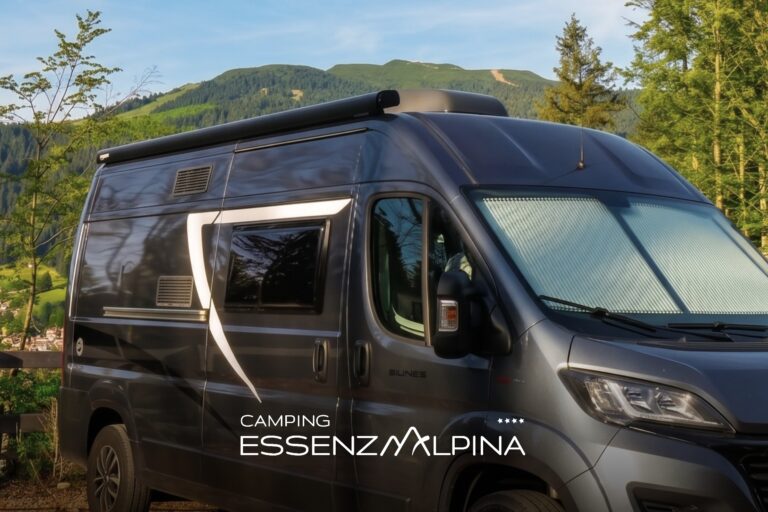
A camper is freedom. It’s the only vehicle that carries home, kitchen, bed, and a window to the world all in one. And the mountains-with their forests, constantly changing views, and true silence, are where that freedom makes the most sense.
Unlike the sea, which often means crowded summer beaches, the mountains offer a different quality of space: larger pitches, fewer crowded campsites (especially outside peak season), and a slower rhythm. Plus, an incredible variety of experiences: hiking, cycling, alpine huts, and foraging in summer; skiing, snowshoeing, and the warmth of a sauna after a day on the slopes in winter.
This is also why Trentino, and especially the Alpe Cimbra, has become one of the most popular destinations for camper travellers from Italy and Northern Europe: authentic, accessible, and full of services.
2. Summer Mountains and Winter Mountains: Two Completely Different Journeys
The first mistake many people make when approaching camper life in the mountains is thinking that the season only changes what you wear. In reality, it changes almost everything: vehicle preparation, campsite selection, essential services, and even the pace of the day.
Summer Camping in the Mountains
Summer is the easiest season for beginners. Nighttime temperatures can drop significantly even in July and August, and at higher elevations they may fall below 10°C (50°F), but camper management remains relatively straightforward.
The advantages are numerous:
- Terraced pitches with stunning views and fresh mountain air, even during the hottest summer days;
- CAI-SAT hiking trails and MTB routes right at your doorstep;
- Long daylight hours perfect for hikes and day trips;
- Less crowding than at seaside destinations, with more peace, quiet, and space.
However, mountain weather deserves respect: a storm at high altitude can develop quickly, even after a sunny morning. Keep your awning secured and a waterproof jacket within easy reach at all times.
Winter Camping in the Mountains: Yes, You Can – and It’s Worth It
The answer to the question many people ask is simple: yes, you can go camping in the mountains during winter, and those who try it often never want to stop. Waking up to snow-covered landscapes outside your camper window is an experience unlike any other.
That said, winter camping requires more attention and proper vehicle preparation:
- A fully functional and well-maintained independent heating system is essential; this is not something to compromise on.
- Propane performs better than butane in low temperatures and is therefore the preferred choice during winter.
- Make sure your batteries are fully charged before departure, as cold weather reduces their efficiency.
- Carry snow chains on board, as they are mandatory on many Alpine roads from November to April.
- Level your pitch carefully; with snow and ice, leveling blocks become indispensable.
- Keep the heating running even when you’re away from the vehicle, ideally at around 10-12°C (50-54°F), to prevent water systems from freezing.
Choosing a mountain campsite that remains open throughout winter makes an enormous difference. Heated sanitary facilities, electrical hook-ups at every pitch, and easy access even after heavy snowfall are comforts that simply do not exist in improvised parking areas. They can transform the experience from challenging into truly enjoyable.
3. How to Choose the Right Mountain Campsite
Not all mountain campsites are the same. When traveling by camper, choosing the right campsite is almost more important than choosing the destination itself. It’s where you return every evening, where you use the bathroom, where you relax and recharge. Here’s what you should really check, beyond the star rating:
Location and Access
A good mountain campsite must be accessible even for longer vehicles. Alpine switchbacks can be unforgiving, and large motorhomes (over 7 meters / 23 feet) require roads with wide, manageable curves. Before booking, always check the access road-one phone call to reception can clear up any doubt.
Location relative to activities matters just as much: being directly on the ski slopes in winter, or just a few minutes from hiking trails in summer, removes logistical stress and significantly increases your usable time outdoors.
Pitches: Size and Facilities
Mountain pitches vary greatly. Some are terraced with panoramic views, others are flatter and more uniform. For larger campers, it is essential to verify dimensions (maximum length and width allowed) as well as surface type (asphalt, gravel, grass). In winter, a well-draining surface is important to prevent ice forming under the vehicle overnight.
Key facilities should not be overlooked: electrical hook-up (at least 6A, ideally 16A), grey water discharge directly at the pitch or nearby, and power access if you are bringing an electric car or e-bikes.
Bathrooms and Comfort
In the mountains, where nighttime temperatures can be cold even in summer, the quality of sanitary facilities makes a real difference. Hot showers, underfloor heating, and clean, well-maintained spaces are not a luxury: they are a clear sign of a campsite that genuinely cares for its guests. A laundry area and an on-site mini-market complete the picture for longer stays.
The Unexpected Plus: Wellness
An increasing number of camper travelers are looking for campsites that offer more than just a place to sleep after a day outdoors. A wellness center, sauna, panoramic pool, or similar facilities transform a campsite from a simple “overnight stop” into a true holiday destination. This is a growing trend that is reshaping how people choose campsites, and it rewards those structures that invest in this direction.
4. What to Bring: The Mountain Camper Checklist
Camper travel is all about balancing essentials and completeness. In the mountains, a few extra precautions compared to the seaside or flatland are well worth it.
Layered Clothing
The layering principle applies year-round at altitude. Even in July, mornings and evenings can be surprisingly cold. Functional layers, a fleece, and a lightweight waterproof jacket are essential.
In winter, the system becomes even more important: thermal base layer, mid-layer, insulated jacket, gloves, and proper footwear designed for cold and snow.
Camper Equipment
In addition to standard camping gear, mountain travel calls for a few extra essentials:
- Wheel chocks and stabilizers, as terraced pitches are rarely perfectly level;
- Electrical cables with adapters for European hook-up columns;
- Basic first aid kit;
- Rechargeable flashlight, because darkness at altitude is true darkness.
- In winter: snow chains, ice scraper, de-icing salt for steps and entry areas.
Sports Equipment
This depends on the season and destination, but planning ahead helps avoid overloading the vehicle. Many campsites offer e-bike rental and equipped ski rooms with lockers and heated boot storage. Checking these services in advance is a smart habit, it often means you don’t need to bring everything from home.
5. Camper Life in the Mountains with Children and Pets
Two of the most popular and most searched combinations among camper travelers are mountain holidays with children and trips with a dog. Both deserve a closer look.
With Children
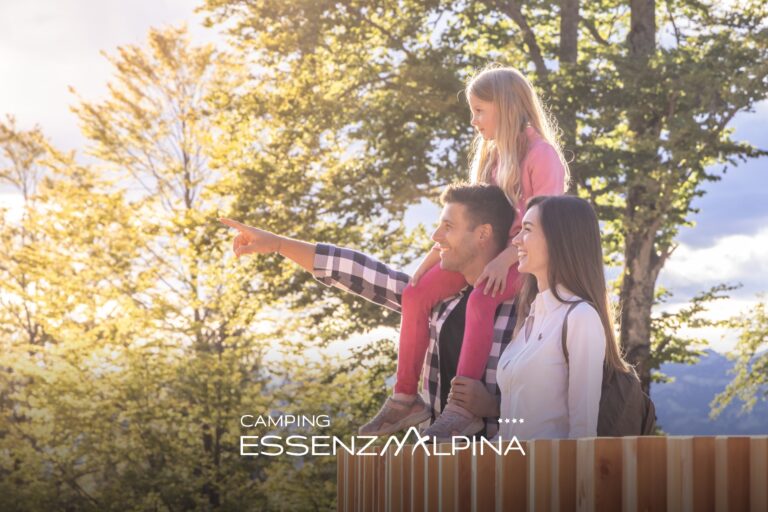
The mountains in summer are a paradise for kids: open space, freedom of movement, and endless outdoor activities. Campsites add a social dimension, with other children, playgrounds, and shared areas where kids naturally connect and play together.
In winter, facilities such as ski rooms and nearby baby parks make a ski holiday much more manageable for the whole family.
What to check in advance: availability of child-friendly bathrooms, indoor play areas for rainy days, practical services such as laundry (with children, keeping clothes clean and in rotation is never a small detail).
With Dogs
Camper travel with pets in the mountains is one of the most complete outdoor experiences you can have. Most alpine trails are dog-friendly (on a leash), and the outdoor lifestyle is perfectly suited to almost any breed.
It’s important to check that a campsite is truly pet-friendly, not just “tolerant.” The difference shows in the details. A dog washing areas, a dedicated dog exercise zones, staff accustomed to welcoming animals. These elements indicate a structure that has genuinely thought about four-legged guests, not just accepted them.
6. Mountain Campsite Etiquette
Campsite life has its own unwritten rules, which experienced camper travelers know well and which are worth remembering for beginners. In the mountains, some of these take on a specific meaning.
- Respecting silence at night: in the mountains, silence is a value, not just a given condition. Voices carry far in thin air, so even small noises can be heard across the campsite.
- Do not block pathways: terraced pitches often have narrow access routes. Tents, tables, and outdoor setups should be arranged so they do not obstruct movement or emergency access.
- Handle waste and disposal responsibly: the mountains are unforgiving when it comes to environmental care, and well-run campsites expect proper management of grey water and rubbish at all times.
- Respect traffic regulations: a camper is considered “in travel mode” when steps are retracted and windows are closed. Outside campsites and designated areas, this distinction matters-it separates a legal stop from unauthorized camping.
- On narrow mountain roads, pull over and give way if a line of vehicles is behind you. It is both a matter of courtesy and safety.
7. Folgaria and Alpe Cimbra: Why Choose Them for Camper Travel
Among Italian Alpine destinations for camper travelers, Folgaria holds a special place. Located in Trentino, on the Alpe Cimbra plateau at around 1,200 meters above sea level, it is a wide mountain plateau surrounded by forests and peaks, close to Trento and within reasonable reach from much of northern Italy as well as the Austrian and German Alpine arc.
Folgaria is an Italian destination certified by GSTC for sustainable tourism and was named European City of Sport 2025. Two recognitions that say a lot about the quality of the area and the care with which it is managed.
For camper travelers in particular, the reasons to choose it are very practical:
- Roads that are easily accessible even for long vehicles;
- The Folgaria-Lavarone-Luserna ski area in winter;
- A network of CAI-SAT hiking trails and MTB routes directly accessible in summer;
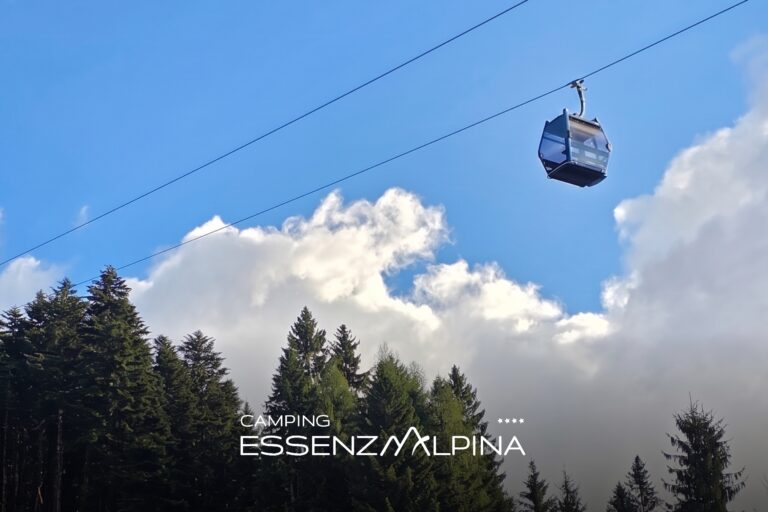
- The Francolini-Sommo Alto cable car, operating both in winter and summer (May to October);
- A Trentino Guest Card included in the stay, offering free public transport, access to museums and castles, and discounts on activities;
- Folgaria is part of the Alpine Pearls network, which promotes sustainable mobility and low-impact tourism.
8. Camping Essenza Alpina: The Base to Experience It All
We’ve talked about what to look for in a mountain campsite. Let us show you what you’ll find at Camping Essenza Alpina.
We are located in Folgaria, in the Francolini area, on a slope that opens both toward the mountains and the village-a wide panorama that turns lush green in summer and white in winter. We are open all year round, except for May.
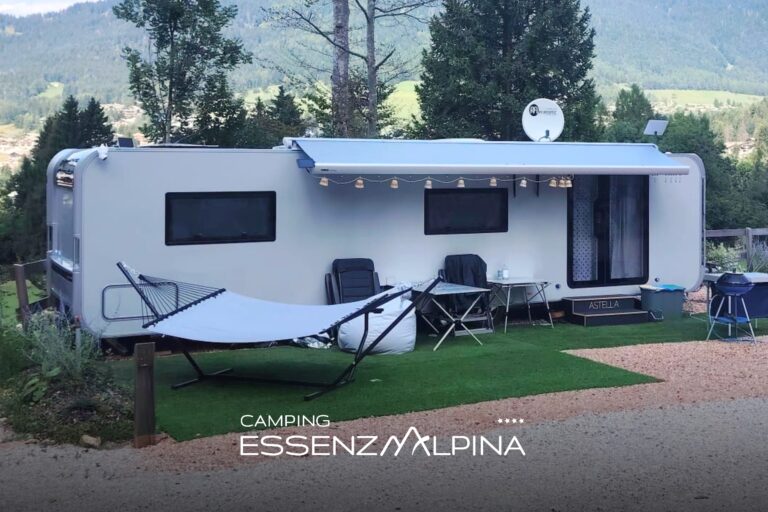
The 80 pitches are terraced and panoramic, all equipped with electrical hook-up and grey water discharge. Some also include on-pitch electric vehicle charging, and for e-bikes there is both rental and charging service available.
The Francolini-Sommo Alto cable car is just a few steps away: in winter you are literally on the ski slopes, while in summer you can reach the panoramic views of Sommo Alto without needing a car.
Services That Make the Difference
We know what it means to return from a day on the slopes or a demanding hike. That’s why we have designed everything to ensure comfort is never compromised:
- SPA Essenza Alpina with panoramic Finnish sauna, Turkish bath, cold plunge pool, Aufguss rituals, massages, private bookable AirPool, and from summer 2026 a panoramic outdoor pool;
- Heated ski room with boot warmers, lockers, and secure external access;
- Heated bathrooms, showers with underfloor heating, and laundry facilities;
- On-site mini-market with local products, fresh goods, and everything needed for camper life;
- Bar Essenza Alpina open for breakfast, lunch, and dinner;
- Indoor and outdoor play areas, including I-Wall for teenagers;
- Dog washing area and fenced dog run in the Pineta zone;
- Free WiFi, always-available reception, multilingual staff (Italian, English, German).
This is not just a campsite that hosts you. It is a place where you actually want to stay.
Ready to go?
Living in a camper in the mountains is not a formula. It is a way of being in the world that everyone builds in their own way, with their own caravan or van, with their children or their dog, in August or in December under the snow.
What truly matters is having the right base: a campsite that really works, in a destination that truly delivers.
Folgaria and Camping Essenza Alpina are here, open and ready, in every season except May.